San Francisco is a city that demands a lot from your vehicle. Its famously steep hills, dense neighborhoods, packed parking situations, and varied microclimates create conditions that are hard on cars in ways that drivers from other cities rarely anticipate. Among the most common vehicle issues San Francisco drivers deal with is auto glass damage from the inevitable road debris on the 101 and the Bay Bridge approaches, to the consequences of the city’s still-active vehicle break-in culture, to the simple wear and tear of a car that parks on the street in all weather.
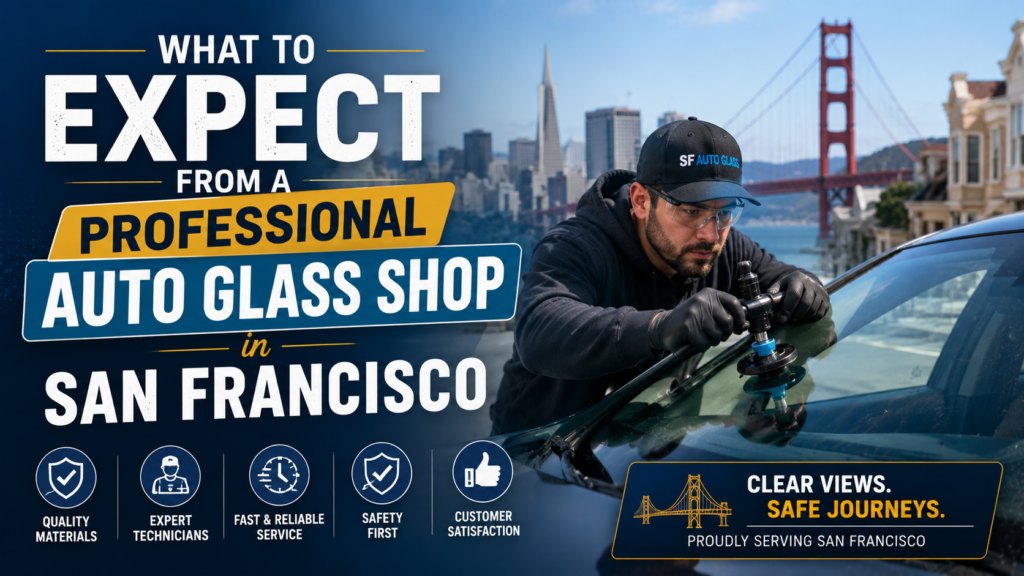
Finding a reliable Auto Glass Shop San Francisco means understanding what services are actually available, what questions to ask, what the process looks like from call to completion, and how to make sure the work done on your vehicle meets the safety standards your car deserves. This guide walks through all of it.
The Range of Services a San Francisco Auto Glass Shop Provides
A full-service auto glass shop handles much more than cracked windshields. Understanding the full scope of services available helps you know exactly who to call and what to request for your specific situation.
Windshield repair is the most common service. When a chip or crack is caught early and falls within repairable parameters generally a chip under an inch in diameter or a crack under six inches that has not reached the windshield edge a technician can fill the damage with resin, cure it, and restore structural integrity without removing the windshield. This process typically takes under an hour.
Windshield replacement is required when damage is too extensive to repair. This involves removing the damaged windshield, preparing the bonding surface, and installing a new windshield using a high-strength polyurethane adhesive. The adhesive must cure before the vehicle is driven; your technician will advise on the correct wait time for your specific vehicle and conditions.
Side window replacement addresses broken or shattered tempered glass on doors and other window positions. Because tempered glass cannot be repaired it is designed to shatter completely on significant impact replacement is always the service required. In San Francisco, this service is frequently needed following vehicle break-ins.
Rear window replacement handles the back glass, which often incorporates embedded defogger grids and sometimes antenna elements. Professional installation ensures those embedded systems function properly after the new glass is in place.
Window regulator and motor repair addresses mechanical failures that prevent windows from moving correctly. A window stuck in the open position is a genuine security and weather vulnerability, especially in a city where overnight temperatures drop and fog rolls in off the bay. Many auto glass shops handle regulator and motor work alongside glass services.
ADAS recalibration is an increasingly critical service. Modern vehicles feature forward-facing cameras mounted to or near the windshield that power safety systems such as automatic emergency braking, lane keeping assist, and adaptive cruise control. Any windshield replacement on a vehicle with these systems requires post-installation camera recalibration to manufacturer specifications.
Mobile Service: How It Works in San Francisco
One of the most significant developments in auto glass service over the past decade is the widespread availability of mobile service. Rather than bringing your vehicle to a fixed shop location, a mobile technician comes to wherever your vehicle is parked your home in the Inner Sunset, your office parking structure in the Financial District, a street spot in the Mission, or anywhere else in the city.
Mobile service is genuinely practical for most repairs and many replacements. A chip repair, for example, takes 30 to 45 minutes and requires nothing more than a vehicle that can stay parked for the duration. A windshield replacement takes longer typically 60 to 90 minutes for the work itself, plus the safe drive-away wait period but can be arranged at a location where the vehicle can sit undisturbed for the necessary time.
When booking a mobile appointment, be prepared to provide accurate information about your vehicle. Year, make, model, and trim level all affect which glass is needed. The VIN (Vehicle Identification Number) is the most reliable way to ensure the correct part is sourced, particularly for vehicles with factory-installed sensors, heated windshield elements, or head-up displays embedded in the glass. Providing this information at booking ensures the technician arrives with the right glass and hardware for a single-visit completion.
One practical consideration for San Francisco drivers: mobile service works best when you can guarantee the parking spot for the duration of the appointment. Street parking turnover can make this challenging in denser neighborhoods. If you are unsure, scheduling at a location with more predictable parking your building’s garage, a private driveway, a workplace parking structure avoids complications.
Auto Glass and San Francisco’s Break-In Reality
San Francisco has a complex history with vehicle break-ins. At various points in recent years, the city experienced some of the highest rates of auto burglary in the country. More recently, reported incidents have declined significantly, reaching their lowest levels in roughly two decades according to local law enforcement data. That is genuinely good news and it is also why several auto glass businesses in the city have had to diversify their services, as the volume of break-in-related glass replacement requests has dropped substantially.
For drivers who do experience a break-in, a shattered side window is the most common glass damage. As noted above, tempered side glass shatters completely and must be replaced there is no repair option. Following a break-in, getting a replacement scheduled as quickly as possible matters both for security and weather protection. Many auto glass shops in San Francisco offer same-day or next-day scheduling for exactly these situations.
It is also worth noting that comprehensive auto insurance coverage typically includes auto glass damage, including break-in related window replacements, often without requiring a deductible payment. Checking your policy before scheduling service may save you the out-of-pocket cost entirely.
OEM vs. Aftermarket Glass: What the Difference Means
When a windshield or other glass panel is being replaced, one decision that affects the quality of the final installation is whether to use OEM (Original Equipment Manufacturer) glass or aftermarket glass. This distinction matters more for some vehicles than others.
OEM glass is manufactured to the exact specifications of the glass that came with your vehicle from the factory. It matches the optical characteristics, thickness, curvature, tinting, and any embedded features precisely. For vehicles with cameras or sensors that interact with the windshield, OEM or OEM-equivalent glass helps ensure those systems function correctly after installation.
Aftermarket glass is produced by third-party manufacturers. Quality varies significantly across the aftermarket landscape. Reputable aftermarket manufacturers produce glass that meets or approaches OEM specifications and is appropriate for most vehicles. Lower-quality aftermarket glass can have subtle differences in clarity, curvature, or feature compatibility that cause problems particularly on modern vehicles where sensors are precisely calibrated to the glass in front of them.
When discussing a replacement with your auto glass shop, ask specifically whether OEM or aftermarket glass is being used and, if aftermarket, which manufacturer. A shop that can answer this question clearly and explain why they are recommending that glass is demonstrating the kind of transparency that indicates a trustworthy operation.
Questions Worth Asking Before Your Service
A professional auto glass shop should be able to answer the following questions clearly and without evasion. Asking them before committing to service helps you assess the quality of the operation you are dealing with.
Does my damage require repair or replacement? A reputable technician will not automatically recommend the more expensive option. If your chip is repairable, a good shop will tell you so. Be cautious of operations that push replacement for damage that experienced professionals would recognize as repairable.
Will my vehicle require ADAS recalibration after the replacement? This question matters enormously for newer vehicles. Calibration is not optional it is a safety requirement. A shop that is unaware of this requirement or dismissive of it is not equipped to handle modern vehicles safely.
What adhesive is being used, and what is the safe drive-away time? The adhesive bonding your windshield to the frame must achieve a minimum strength before the vehicle is subjected to driving forces. Your technician should give you a specific, vehicle-appropriate wait time.
What warranty is provided on the work? Quality shops stand behind their installations. Warranty coverage for workmanship defects leaks, improper fit, installation-related distortion reflects confidence in the quality of the service being performed.
Can I see a photo of the glass before installation? While not standard practice everywhere, some customers find it reassuring to know the specific part being used. A shop that is forthcoming about the glass it sources is a shop that has nothing to hide.
After Your Service: What Comes Next
After a chip repair, your windshield is typically ready for normal use almost immediately. The resin is cured on-site and the repair is complete. Your technician may suggest keeping the vehicle out of a high-pressure car wash for a day or two as a precaution, but normal rain and driving are fine.
After a full replacement, follow your technician’s specific instructions on safe drive-away time. This varies depending on the adhesive chemistry, the weather conditions, and your specific vehicle. In general, do not drive the vehicle until the technician clears it. Once it is safe to drive, avoid slamming doors with the windows closed for the first day, as internal air pressure can stress a newly bonded windshield seal. Leaving one window cracked slightly when closing the door is an easy preventive habit.
Rain is not a problem for a newly replaced windshield in fact, moisture assists some adhesive cure chemistries. High-pressure water from an automatic car wash is a different matter and should be avoided until the adhesive has reached full cure strength, typically at least 24 hours.
If your vehicle required ADAS recalibration, confirm with your technician that this was completed and that all systems are functioning correctly before relying on those safety features. A post-calibration system scan is standard practice and should be included in the service.
Keeping Your Glass in Good Condition in San Francisco
San Francisco’s climate characterized by morning fog, occasional salt air, temperature swings between neighborhoods, and the physical stresses of hilly terrain creates specific considerations for auto glass maintenance.
Avoid parking directly under trees when possible. Falling acorns, branches, and debris are a common source of chips. If street parking is your only option, be thoughtful about which spots offer some protection from overhead hazards.
Use a sunshade when parked in direct sun. The rapid temperature change when you first turn on the air conditioning against a sun-baked windshield can stress existing chips and cause them to crack suddenly. Moderate temperature extremes where possible.
Address chips and small cracks immediately. The longer damage is exposed to the road environment temperature cycling, vibration, contaminants the more it degrades and the less likely a repair becomes viable. The decision to repair is always easier and less expensive the earlier it is made.
Conclusion
San Francisco drivers face a specific set of challenges that make reliable auto glass service not just a convenience but a genuine necessity. The city’s roads, its climate, its parking realities, and the density of its streets all contribute to a higher-than-average likelihood of auto glass issues. A professional auto glass shop in San Francisco offers much more than a simple fix it provides a safety-critical service that keeps your vehicle structurally sound, your visibility clear, and your driver assistance systems functioning as designed.
Knowing what services are available, what questions to ask, and what to expect at every stage of the process puts you in control of that interaction and ensures you get the quality outcome your vehicle and your safety deserve.